What Exactly Is Raw Denim?

Raw denim is simply denim that hasn’t gone through any factory washing, distressing, softening, or fading. It’s cut and sewn straight from the loom, which means the fabric feels stiff at first and the indigo dye is still rich and untouched.
Raw Denim vs Washed Denim: What’s the Difference?
Most jeans you see in shops today are washed denim. They’ve been softened, pre-faded, or treated to give them a certain look straight off the rack.
Raw denim is the opposite; it’s untouched. No wash cycles, no distressing, no artificial fading. That’s why it feels firmer and lasts longer.
Why Raw Denim Looks and Ages Differently
Because it hasn’t been pre-washed, raw denim forms natural creasing patterns as you move. Over time, these high-wear points fade in the shape of your lifestyle (this is where terms like honeycombs, whiskers, and stack fades come from). Every pair ends up looking slightly different, which is a big part of its appeal in streetwear.
Why Raw Denim Became a Streetwear Trend

Raw denim has always been popular in niche fashion circles, but over the last few years it’s become a staple in mainstream streetwear. A mix of cultural shifts, creator influence, and the rise of workwear aesthetics pushed it back into the spotlight.
The Rise of Workwear in Fashion
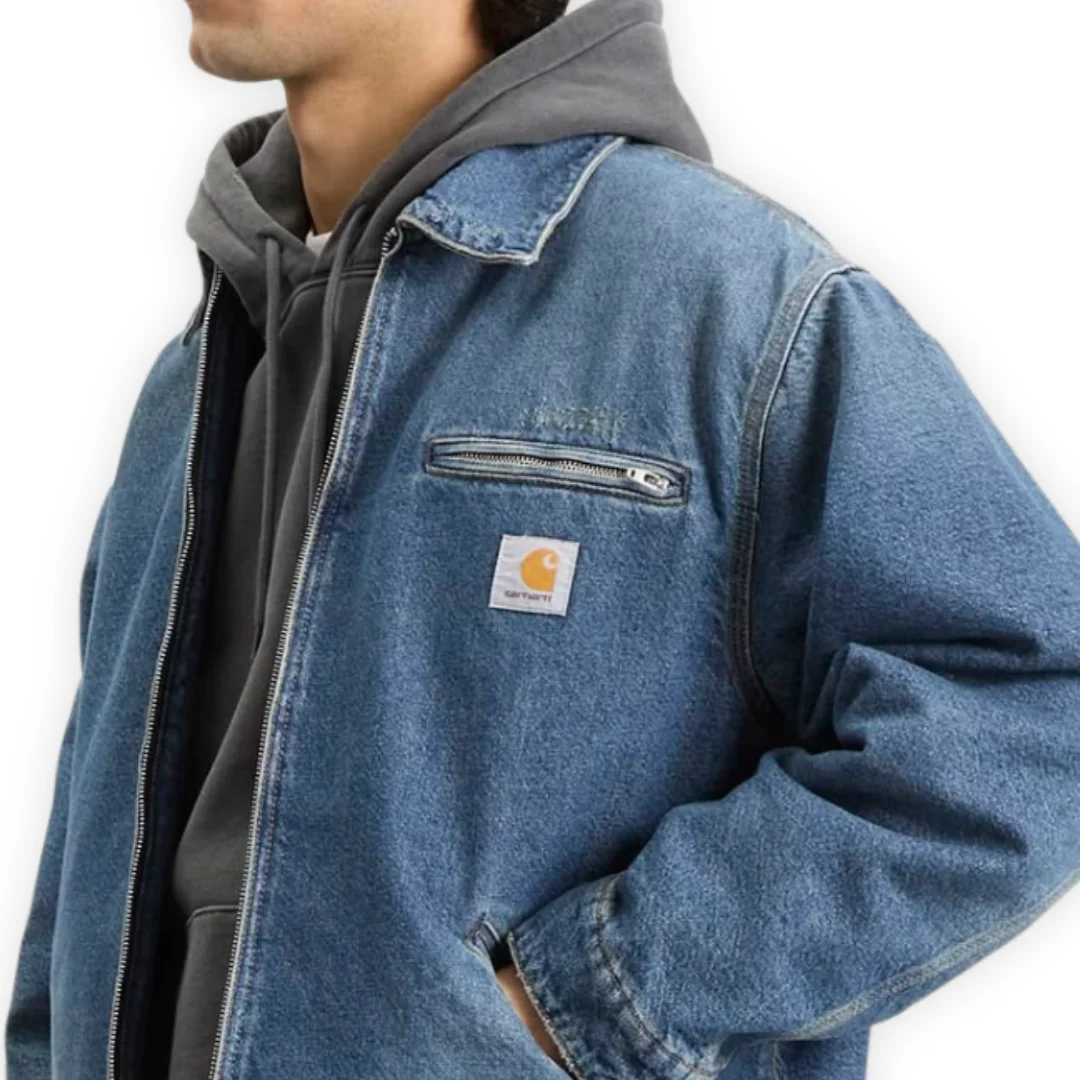
Streetwear has leaned heavily into rugged, functional pieces – Carhartt jackets, chore coats, heavy hoodies, and vintage-inspired silhouettes. Raw denim fits perfectly into that aesthetic: durable, structured, and authentically “worn in” over time.
Heritage and Japanese Denim Influence
Japanese selvedge denim has played a huge role in raw denim’s popularity. Brands in Japan preserved traditional denim weaving long after the West moved to mass production. That craftsmanship became highly respected in streetwear, influencing everything from silhouettes to the type of denim creators look for.
Influencer, TikTok & Creator Push
Creators started posting their fade progress, “6 months of raw denim wear tests,” and day-to-day fits featuring raw denim with hoodies, leather jackets, and big outerwear. This made raw denim feel accessible, cool, and part of the modern streetwear uniform.
The Return of Baggy & Straight Fits
As skinny jeans declined, raw denim surged. The natural stiffness works perfectly with straight, relaxed, and stacked silhouettes – all trending heavily in both high-end fashion and everyday streetwear.
Is Raw Denim Expensive?
Raw denim can be expensive – but it doesn’t have to be. The price varies massively depending on how the denim is made, where it comes from, and the type of fabric used. Here’s a clear breakdown so readers understand exactly why some pairs cost £40 and others cost £300+.
The Short Answer
Raw denim ranges from entry-level affordable options all the way to premium Japanese selvedge that’s crafted using traditional techniques. The higher price usually reflects the fabric quality and the production process.
Why Some Raw Denim Costs More
These are the main factors that push the price up:
- Premium cotton: Higher-quality long-staple cotton creates stronger, smoother denim.
- Traditional weaving methods: High-end pairs are often made on shuttle looms – slow, vintage machines that produce tighter, more durable fabric with a clean edge (selvedge).
- Japanese craftsmanship: Japan has become the global leader in raw denim, known for small-batch production and obsessive attention to detail.
- Low production volume: Many raw denim brands produce in small runs, increasing cost.
- Hand-finishing: Everything from stitching to rivets can be hand-applied, adding labour cost and detail.
Typical Price Ranges
A simple, honest breakdown your readers will appreciate:
- Entry-level raw denim: £40-£80
- Mid-range raw denim: £80-£150
- Premium Japanese selvedge: £180-£400
- Collector-level pieces: £500+
This creates a clear expectation for anyone thinking of buying their first pair.
What Does “Selvedge” Mean?

Selvedge is one of the most commonly mentioned terms when people talk about raw denim, and it often gets confused as meaning “high quality” or “expensive.” Here’s the simple explanation.
The Meaning of Selvedge Denim
Selvedge (also spelled self-edge) refers to the clean, finished edge of the fabric created when denim is woven on shuttle looms. These looms produce narrow rolls of denim, and the tightly woven edge prevents fraying – that’s the coloured line you see when you cuff your jeans.
Why Selvedge Denim Costs More
- Shuttle looms work slowly
- The fabric is denser and often lasts longer
- Production is usually done in small batches
- Many premium Japanese mills use these machines
This doesn’t mean every pair is luxury, but it does explain the higher costs.
Not All Selvedge Is Raw – And Not All Raw Denim Is Selvedge
This is where most people get confused:
- Some selvedge denim is pre-washed or treated
- Some raw denim uses non-selvedge fabric
- The two terms overlap but don’t mean the same thing
Understanding this helps readers make better buying decisions and avoids the typical “selvedge = raw” misconception.
How Raw Denim Fits Into Modern Streetwear

Raw denim works perfectly with today’s streetwear aesthetic – structured silhouettes, clean lines, and pieces that age naturally with wear. Here’s how it fits into the current landscape.
Trending Fits: Baggy, Straight & Stacked
The shift away from skinny jeans opened the door for raw denim to become mainstream again. The stiff structure works best in:
- Straight-leg fits
- Relaxed baggy cuts
- Stacked hems over sneakers or boots
These shapes are dominating streetwear right now, from TikTok creators to high-end fashion designers.
Raw Denim With Streetwear Staples
You’ll see raw denim consistently styled with:
- Oversized hoodies
- Puffer jackets
- Leather jackets
- Varsity jackets
- Workwear staples (Carhartt, Dickies, denim jackets)
- Boots or chunky sneakers
Because raw denim starts clean and dark, it pairs well with almost any outerwear or footwear.
Creator Influence and Fade Culture
Creators are a big part of the trend. Posting fade progress: honeycombs, whiskers, stack marks – turned raw denim into something people document, not just wear. This made raw denim feel personal and aspirational, pushing it deeper into the streetwear mainstream.
Pros & Cons of Choosing Raw Denim
Raw denim has a lot going for it, but it also comes with a few things you should know before buying your first pair. This section keeps it honest, balanced, and helpful for readers.
Pros
- Ages uniquely to your body: No two pairs fade the same – the creases, whiskers and wear patterns become completely personal.
- Extremely durable: Because it hasn’t been softened or pre-washed, the fabric starts stronger and typically lasts longer.
- Works perfectly with modern streetwear fits: Raw denim holds shape well, giving you clean straight, baggy, or stacked silhouettes.
- Develops character over time: The more you wear it, the better it looks. It becomes a long-term piece rather than a fast-fashion item.
Cons
- Stiff at first: The break-in period can feel uncomfortable until the denim softens and moulds to you.
- Indigo dye can bleed: Raw denim can transfer colour onto shoes, white furniture, or light clothing early on.
- Requires patience: You don’t get instant fades – they develop over months of wear.
- Higher price at the premium end: Japanese selvedge in particular can get expensive compared to standard high-street denim.
How to Make Raw Denim Soften & Fade Properly
Getting the best out of raw denim means giving it time, and following a few simple care rules. Here’s how wearers and denim fans recommend you treat a new pair so it breaks in well and fades in a way that looks natural and unique.
Break-in Tips: Wear, Don’t Wash (Right Away)
- Wear often, from day one: The friction and movement help soften the denim naturally and begin forming your personal creases – hips, knees, cuffs, whatever matches your lifestyle.
- Avoid washing early: Let the indigo set and fading begin naturally; washing too soon can prevent deep fades from forming properly.
- Move and live in them: Sitting, walking, crouching – normal everyday movement helps shape the denim to your body.
Washing Tips: When You Do Wash
When it’s time for a wash:
- Use cold water: warm/hot water speeds up fading but risks shrinking or weakening the fabric.
- Prefer gentle or soak wash over machine wash: soaking helps preserve dye and fabric integrity.
- Use mild detergent or a detergent designed for dark denim: avoids stripping colour.
- Wash as rarely as possible: unless you’ve got stains or smell, air them out instead of washing frequently.
- Dry naturally: avoid tumble-drying (if you want to preserve fit and avoid shrinkage).
With the right care, raw denim can evolve into a pair of jeans that tells your story: unique fades, creases, and patina that reflect your movement, lifestyle, and daily wear.
Final Thoughts
Raw denim has become a major streetwear staple for a reason. It’s durable, authentic, and ages in a way that no pre-washed pair ever can. Whether you’re into the clean, structured look or the long-term fade potential, raw denim offers something genuinely unique – and that’s why creators, collectors, and everyday streetwear fans are all wearing it.
While some pairs can be expensive, raw denim covers a huge price range. You can get an affordable entry-level pair, or go all-in on premium Japanese selvedge – it all depends on what you want from the fit, the fabric, and the fade journey.
If you’re building a streetwear wardrobe that lasts, raw denim is one of the most rewarding pieces you can add.
If you want more affordable fashion, affordable alternatives and weekly fashion news, make sure you’re signed up to our newsletter – we share the best finds before they sell out.