What’s happening with Fragment x Nike Mind
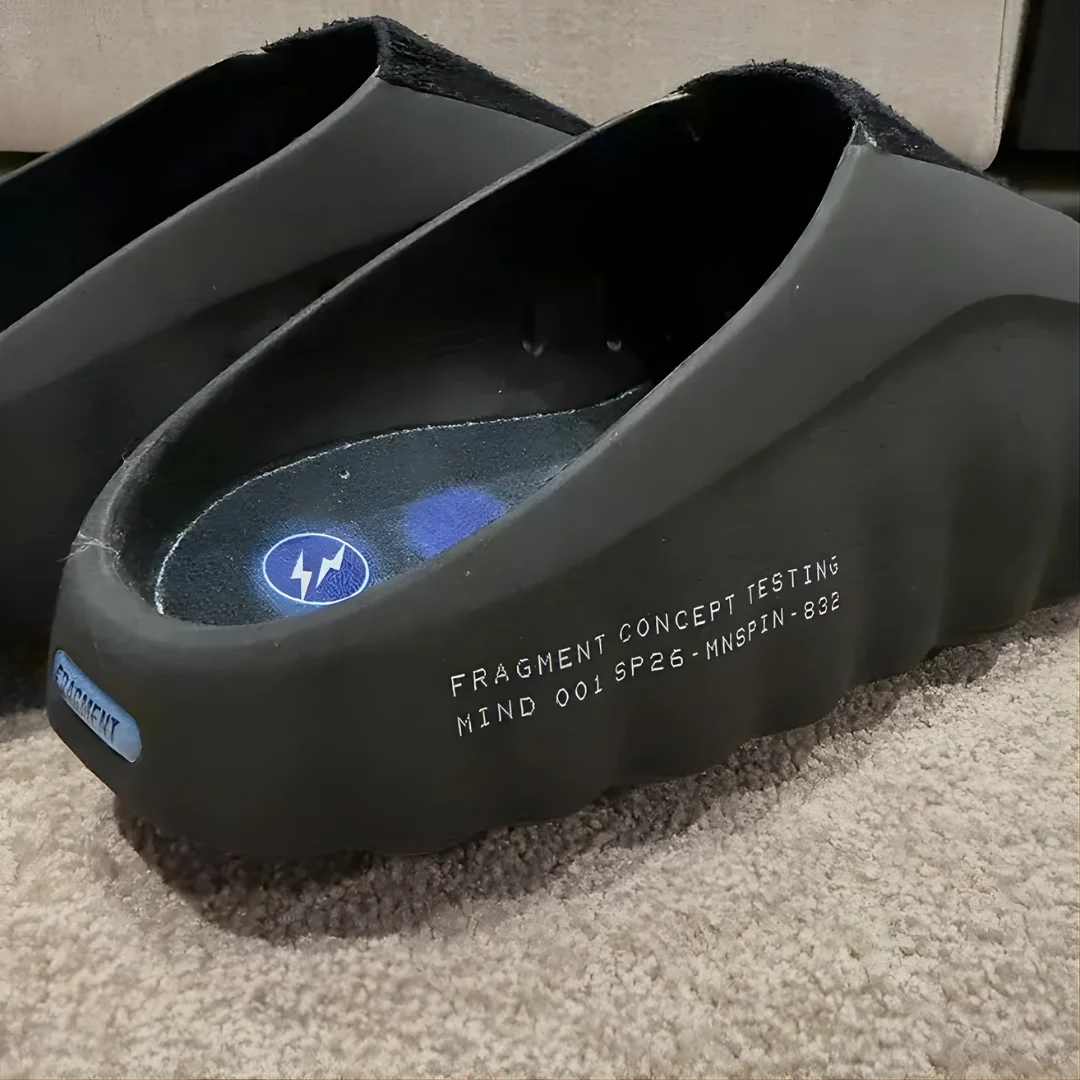
Reports and leaks suggest Fragment is set to collaborate on the Nike Mind silhouette. On the surface, that’s not surprising – Nike collaborates constantly. But Fragment isn’t just another logo slapped on a shoe. It’s a cultural shortcut.
A Fragment collaboration instantly reframes a product. It signals “important”, “limited”, “collectible”. It changes how the shoe is talked about, how it’s priced, and how it’s treated on release day. The Nike Mind, a silhouette that’s still finding its footing, is already being pulled into that ecosystem.
That speed is the point.
Fragment doesn’t collaborate by accident
Fragment’s value has never been about wild design changes. It’s about permission. Permission for consumers to treat something as special. Permission for higher price tags. Permission for resale culture to do what it does best.
Historically, Fragment has attached itself to silhouettes that either already mattered or were about to be positioned as such. The collaboration acts as confirmation, not discovery. Which is why seeing Fragment linked to the Nike Mind this early feels telling.
This isn’t Fragment stumbling across a great shoe. It’s Fragment being deployed as part of the rollout.
When “icon status” is decided before the shoe is worn
Normally, icon status is earned. Slowly. Through wear, repetition, cultural moments, and genuine adoption. Think Air Force 1s, Dunks, Sambas – none of these needed early validation to exist.
The Nike Mind is taking a different route.
By introducing a Fragment collaboration so early, Nike effectively skips the organic phase. The silhouette doesn’t need to prove itself to consumers because the narrative has already been decided for them. You’re not being asked if you like the shoe – you’re being told it matters.
That’s where things start to feel fugazi.
Not fake in a counterfeit sense, but artificial. Front-loaded. Manufactured importance rather than earned relevance.
The resale economy depends on this exact playbook
This move makes perfect sense when viewed through the resale lens.
Collaboration equals higher retail. Higher retail plus limited supply equals sell-outs. Sell-outs create perceived demand. Perceived demand fuels resale. Resale then retroactively justifies the hype.
It’s a closed loop.
The Fragment x Nike Mind collaboration doesn’t exist despite resale culture – it exists because of it. The shoe becomes a financial object as much as a functional one. Something to flip, hold, or flex, rather than simply wear.
At that point, the product itself almost doesn’t matter.
The Nike Mind isn’t fugazi - the promise is
The Nike Mind isn’t fake in any literal sense. Nike has built the shoe, backed it with research, and positioned it as a performance-led product.
What feels fugazi is the promise attached to it.
The shoe is framed as something that supports cognitive performance, not just footwear, but a product that improves you. That’s a powerful positioning shift, and one that demands scrutiny. Especially when cultural validation arrives before real-world consensus has formed.
Layer a Fragment collaboration on top, and belief accelerates faster than evidence. The co-sign doesn’t prove the function, it fast-tracks the narrative, pricing in value before the shoe has had a chance to stand on its own.
That doesn’t make you wrong for liking the Nike Mind. It simply means the story has moved faster than the proof.
Final thoughts
The Fragment x Nike Mind collaboration isn’t shocking. It’s predictable. And that’s precisely why it’s worth talking about.
This is modern sneaker culture in its most efficient form: hype engineered in advance, value implied through association, and demand shaped before the product has a chance to stand on its own.
The Nike Mind may still succeed and make you ‘smarter’. It may even become genuinely popular more so than Birkenstock… But when icon status is assigned this early, it raises a simple question worth asking more often:
Are we buying into great products – or just well-executed stories?